Precision Automation in Unexpected Places: The Industries Quietly Discovering Their Robotics Moment
The Assembly Line Was Just the Beginning
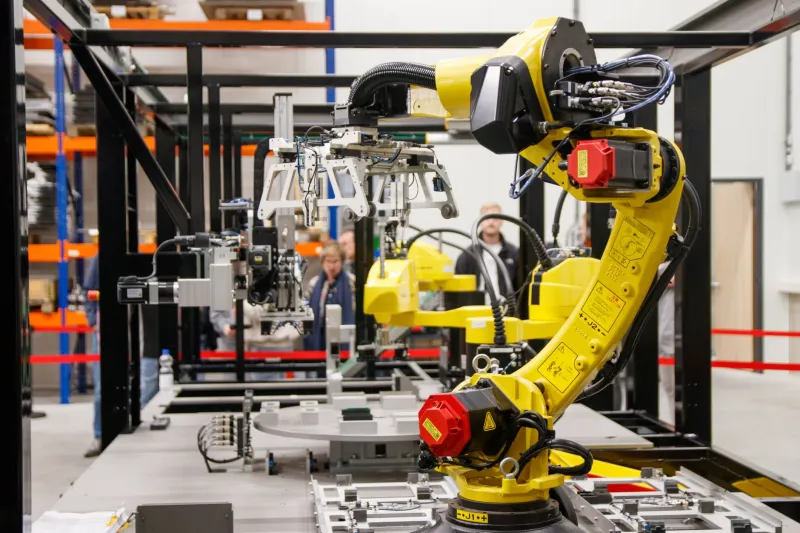
When most Americans picture industrial robotics, the mental image is familiar: a large automotive plant, rows of orange arms welding chassis components with balletic precision. That image is not wrong. Automotive manufacturing was, for decades, the primary domain of large-scale industrial automation, and the sector still represents a significant share of deployed robotic systems in the United States.
But the geography of robotics adoption is expanding—and the most interesting frontiers are not on traditional assembly lines. They are in pharmaceutical production facilities in New Jersey, electronics assembly operations in Silicon Valley and beyond, custom fabrication shops in the Southeast, and quality inspection environments wherever precision matters and human consistency has limits.
These are sectors where automation adoption has historically been fragmented, hesitant, or simply absent. They are also sectors where the unmet need is substantial and the value of precision robotics—once deployed—is disproportionately high.
Pharmaceuticals: Where Precision Is Non-Negotiable
Few industries carry the quality stakes of pharmaceutical manufacturing. A contamination event, a dosing error, or a packaging failure does not simply represent a financial loss—it represents a patient safety incident and, in many cases, a regulatory crisis. The pressure to maintain absolute consistency across every unit produced is relentless.
Despite this, significant portions of U.S. pharmaceutical manufacturing remain dependent on manual operations. Compounding pharmacies, specialty drug manufacturers, and clinical trial supply operations frequently rely on highly trained human technicians to perform tasks that are, by their nature, precision-critical and fatigue-sensitive.
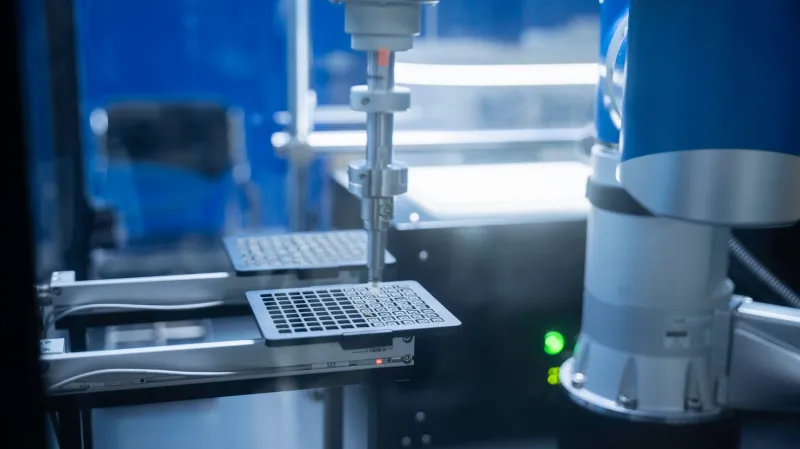
Robotic systems designed for pharmaceutical environments—built to cleanroom standards, capable of handling delicate vials and syringes, programmable for exact dosing parameters—address precisely this gap. Beyond contamination control, they offer something equally valuable: documented, auditable consistency. Every action a robotic system performs is logged. In an FDA-regulated environment, that traceability is not merely convenient; it is operationally essential.
Several mid-sized pharmaceutical manufacturers have begun deploying robotic systems for tasks including vial filling, label application, blister pack assembly, and serialization. Early adopters report not only quality improvements but a meaningful reduction in the labor costs associated with maintaining certified cleanroom technicians—a workforce that is both expensive to train and difficult to retain.
Electronics Assembly: Miniaturization Demands Mechanical Precision
The consumer electronics industry has long operated at the edge of what human hands can reliably accomplish. As component sizes continue to shrink—surface-mount devices now measured in fractions of a millimeter—the tolerance requirements for accurate placement exceed what manual assembly can consistently deliver at production scale.
Yet outside the largest contract manufacturers, electronics assembly in the United States remains heavily manual at many stages. Small-batch production runs, custom circuit board assembly, and specialized electronics manufacturing for defense and aerospace applications frequently involve skilled technicians working under magnification to place, solder, and inspect components.
Precision robotics, particularly systems designed for micro-assembly and vision-guided placement, are beginning to transform these environments. The value proposition is clear: robotic systems can achieve placement accuracies measured in microns, operate continuously without fatigue-induced drift, and adapt to new component configurations through software updates rather than physical retooling.
For U.S. electronics manufacturers competing against overseas facilities that have already automated extensively, this is not an incremental improvement. It is a fundamental capability shift.
Custom Manufacturing: The Flexibility Paradox Resolved
Custom and low-volume manufacturing has traditionally been considered incompatible with automation. The logic was straightforward: robots excel at repetitive, high-volume tasks, and custom manufacturing is by definition neither. Setting up and reprogramming a robotic system for a one-off job seemed to defeat the purpose.
Modern flexible robotics systems have dissolved this assumption. Vision-guided robots capable of identifying and handling variable parts, combined with rapid programming interfaces and modular tooling, can now operate economically in environments with frequent changeovers and small batch sizes.
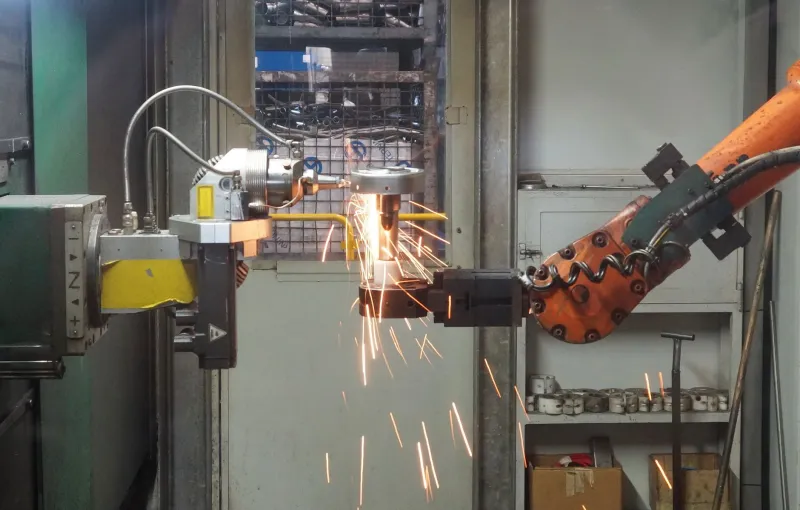
A custom metal fabrication shop in the Pacific Northwest deployed a vision-guided robotic welding system specifically to handle low-volume, high-complexity weldments that had previously required their most experienced welders. The system handles the precision work; the experienced welders now focus on process setup, quality oversight, and the genuinely complex jobs that still benefit from human judgment. Output per shift increased by 28 percent. More significantly, the shop can now reliably quote and win work it previously had to decline due to capacity constraints.
Quality Inspection: The Last Frontier of Manual Dependency
Quality inspection may represent the single largest untapped opportunity for precision robotics in U.S. manufacturing. Across industries—from machined parts to food products to packaged goods—final inspection remains one of the most labor-intensive and least automated stages of production.
The reasons are partly historical. Inspection tasks require judgment, pattern recognition, and the ability to evaluate components that vary in ways that are difficult to fully specify in advance. For decades, those requirements pointed toward human inspectors as the only practical solution.
Advances in machine vision, artificial intelligence, and sensor integration have changed that calculus. Modern robotic inspection systems can detect surface defects, dimensional deviations, and assembly errors with greater consistency than human inspectors—and at throughput rates that manual inspection cannot approach. They do not experience attention fatigue at hour seven of a shift. They apply the same criteria to the ten-thousandth part as to the first.
For manufacturers supplying to aerospace, defense, medical device, or automotive customers—all sectors with demanding quality documentation requirements—robotic inspection systems also generate the digital inspection records that customer audits increasingly require.
Which Industries Will See Disruption Next
Looking forward, several sectors appear positioned for significant robotics adoption in the near term. Agriculture-adjacent processing—the preparation and packaging of specialty food products—combines high labor intensity with precision requirements that robotic systems are increasingly equipped to meet. Construction component manufacturing, particularly prefabricated building systems, is beginning to explore automation for tasks like rebar bending, panel assembly, and precision cutting.
Perhaps most significantly, the defense and aerospace supply chain—currently under significant domestic production pressure—represents an environment where the combination of precision requirements, quality documentation demands, and national security incentives for domestic manufacturing creates a compelling case for accelerated automation investment.
The Engineering Foundation Matters
What unites these diverse application environments is a common requirement: the robotics solution must be engineered with deep understanding of the specific process it is entering. A pharmaceutical filling line is not a scaled-down automotive assembly; an electronics inspection system is not a repurposed material handling robot. Precision automation in non-traditional industries demands engineering partners who approach each deployment with genuine domain knowledge and application-specific rigor.
That is the standard NVS Robotics Bhopal applies to every engagement—and it is the standard that will define which companies in these emerging sectors capture the full potential of the robotics moment that is, for many of them, just beginning.