After the Installation: Why Robotics Systems Underperform and How to Fix the Operational Gap
The Moment the Invoice Is Paid, the Hard Work Begins
There is a persistent myth in American manufacturing circles: once the robots are installed, the efficiency gains follow automatically. Capital is committed, equipment is delivered, and the expectation is that productivity improvements will materialize on schedule. In practice, the story rarely unfolds so cleanly.
Across U.S. factory floors—from automotive suppliers in Michigan to electronics assemblers in Texas—a troubling pattern has emerged. Companies invest significantly in industrial robotics, complete installation on time and on budget, and then watch their anticipated returns plateau or, worse, decline. The culprit is not the technology itself. It is what happens—or fails to happen—after the system goes live.
At NVS Robotics Bhopal, our engineering teams have worked alongside U.S. partners long enough to recognize this gap with precision. The post-deployment phase is where robotics investments are either validated or quietly undermined.
The Three Fault Lines That Appear After Go-Live
1. Integration Conflicts With Legacy Infrastructure
Most U.S. manufacturers operating at mid-scale have production environments built over decades. PLCs from one era communicate—or fail to communicate—with ERP systems from another. When a new robotic cell is introduced into this patchwork ecosystem, the assumption is often that modern equipment will adapt to older infrastructure with minimal friction.
That assumption is frequently wrong.
A food processing company in the Midwest, for instance, installed a high-speed packaging robot that performed flawlessly in the vendor's test environment. On the actual production floor, however, the robot's communication protocol conflicted with a legacy SCADA system installed in 2009. For six weeks following deployment, the line operated at roughly 60 percent of projected throughput while engineers worked to build a custom middleware solution. The cost of that delay—in labor hours, missed orders, and consultant fees—exceeded $180,000.
This scenario is not unusual. According to industry surveys, nearly 45 percent of manufacturers report unexpected integration costs following robotics deployment, with legacy system conflicts cited as the leading cause.
2. The Training Gap That No One Budgets For
Robotic systems require human oversight. They require operators who can interpret error codes, technicians who can perform preventive maintenance, and supervisors who understand how to adjust parameters when production demands shift. Yet workforce training is consistently the most underbudgeted line item in a robotics project.
The typical scenario involves a vendor-provided training session of two to five days at the time of installation. That training is delivered to a small cohort of employees who may or may not be the people actually running the system six months later. Turnover, shift changes, and the natural attrition of institutional knowledge mean that within a year, many facilities are operating complex automation with staff who learned the system secondhand—or not at all.
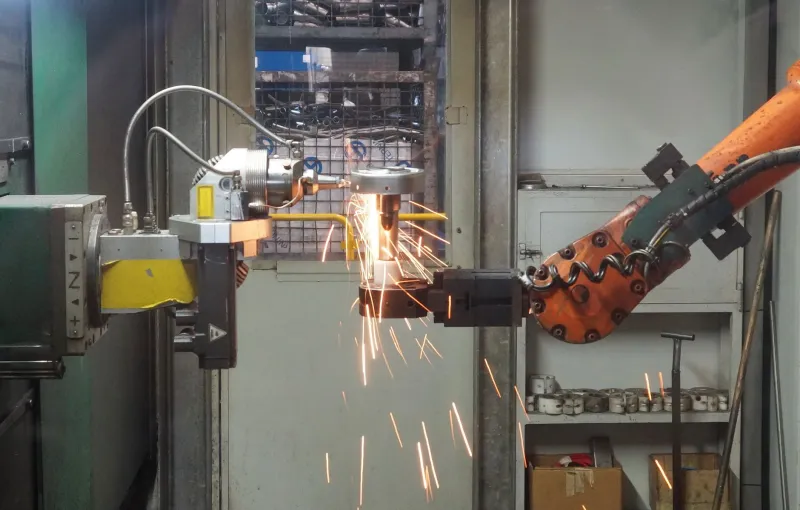
A precision parts manufacturer in Ohio described this dynamic candidly: their robotic welding cell had been operational for fourteen months before a senior technician recognized that operators had been routinely bypassing a quality-check subroutine because no one had explained its function during the original training. Thousands of parts had shipped with a marginally elevated defect rate that went undetected until a major customer audit.
3. Process Design That Was Never Adapted
Robots do not simply slot into existing workflows. They require workflows to be redesigned around their capabilities and constraints. When that redesign does not happen—when a robot is dropped into a process that was engineered for human hands—inefficiencies multiply.
Consider throughput sequencing. A robotic arm may cycle faster than the upstream conveyor can supply parts, creating artificial bottlenecks that negate the speed advantage. Or a quality inspection robot may be positioned at a stage in the line where defect detection is too late to prevent downstream waste. These are not equipment failures. They are process design failures.
Bridging the Gap: What High-Performing Manufacturers Do Differently
Organizations that consistently realize strong returns on robotics investments share several operational disciplines that others do not.
They treat deployment as the beginning of a project, not the end. High-performing facilities establish a formal post-deployment review period—typically 90 days—during which a cross-functional team monitors system performance against benchmarks and identifies friction points before they become entrenched problems.
They invest in continuous training infrastructure. Rather than relying on point-in-time vendor training, these organizations build internal knowledge repositories: documented procedures, video walkthroughs, and tiered competency programs that ensure operational knowledge is transferred regardless of personnel changes.
They engage integration specialists before deployment, not after. The most effective approach to legacy system conflicts is a thorough compatibility audit conducted during the procurement phase. Understanding where integration challenges will arise—and budgeting for their resolution—transforms what might otherwise be a crisis into a managed engineering task.
They redesign processes in parallel with equipment installation. Process engineers and robotics specialists work concurrently, ensuring that the workflow the robot enters on day one has already been adapted to its operating parameters.
The Role of a Committed Engineering Partner
One factor that consistently distinguishes successful deployments is the quality of the ongoing relationship between the manufacturer and their robotics engineering partner. A vendor who delivers equipment and moves on is fundamentally different from an engineering partner who remains engaged through commissioning, optimization, and beyond.
At NVS Robotics Bhopal, our engagement model is built on the premise that the value we deliver is measured not at installation but at twelve months of sustained operation. Our teams bring deep experience in precision automation environments and a disciplined approach to post-deployment support that addresses integration, training, and process optimization as interconnected challenges rather than isolated tickets.
For U.S. manufacturers navigating the complexity of modern production environments, that distinction matters enormously.
Conclusion
The robotics investment case does not fail at the point of purchase. It fails in the operational gap that follows—the weeks and months where integration issues compound, training deficits surface, and process misalignments go unaddressed. Recognizing that gap exists is the first step. Building a structured plan to close it is what separates manufacturers who capture the full potential of automation from those who are still waiting for returns that should have arrived long ago.