Automation Is No Longer a Fortune 500 Privilege: How Mid-Market U.S. Manufacturers Are Entering the Robotics Era

The Assumption That Has Cost Small Manufacturers a Decade
Ask the operations director of a 200-person manufacturing company in the American Midwest whether robotics is relevant to their business, and there is a reasonable chance the answer will still be some version of: "That's for the big players."
It is an understandable assumption, and for a long time, it was largely accurate. The economics of industrial automation historically favored scale. High upfront capital requirements, complex integration demands, and the need for dedicated robotics engineers on staff made serious automation a practical option primarily for large-volume, high-margin operations—the Tier 1 automotive suppliers, the major consumer goods manufacturers, the firms with dedicated automation budgets measured in the millions.
That era is ending. And the manufacturers who recognize the shift earliest will carry a meaningful competitive advantage into the next decade.
What Has Actually Changed
The democratization of robotics automation is not a single development. It is the convergence of several trends that have quietly reshaped the technology and financial landscape over the past five years.
The Rise of Modular and Collaborative Robotics
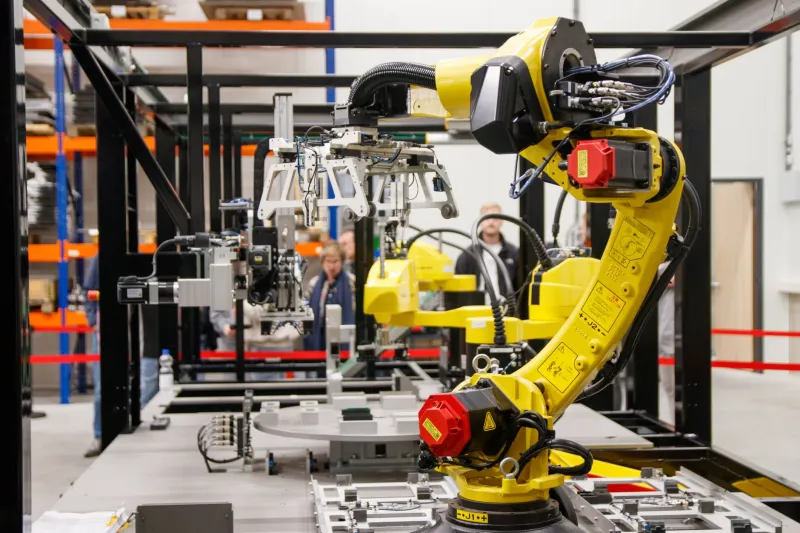
Traditional industrial robots were purpose-built, fixed installations. Programming them required specialized expertise, deploying them required significant facility modification, and repurposing them for different tasks was time-consuming and expensive. They were optimized for high-volume, low-variation production—exactly the environment that large manufacturers operate in and exactly the environment that most small and medium-sized manufacturers do not.
Modular robotics systems and collaborative robots—cobots—have changed the equation fundamentally. Cobots are designed to operate alongside human workers without the extensive safety caging that traditional robots require. They are programmable through intuitive interfaces that do not demand years of engineering training. They can be redeployed from one task to another in hours rather than weeks.
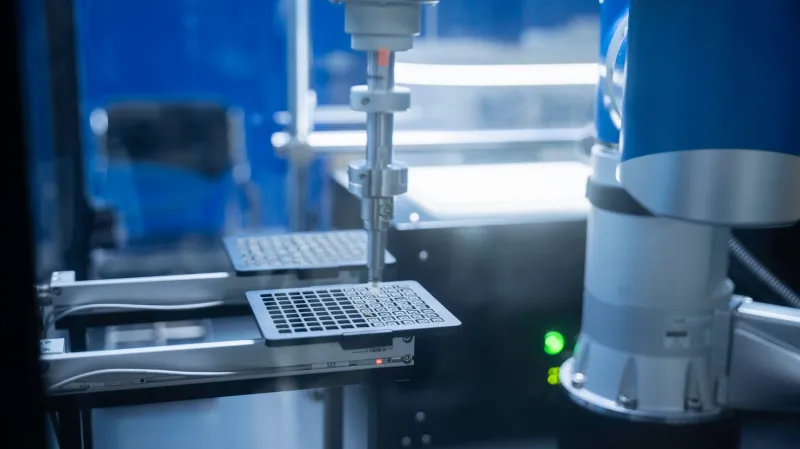
For a custom parts manufacturer running 15 different product lines with frequent changeovers, this flexibility is transformative. The robot that handles precision assembly on Monday can be reconfigured for quality inspection on Thursday. That adaptability, previously unavailable at accessible price points, is now a standard feature of systems offered by multiple vendors in the $30,000 to $80,000 range.
Financing Models That Match Operating Realities
Capital expenditure has always been the primary barrier for smaller manufacturers considering automation. A robotics system that might generate a 24-month payback still requires the initial outlay—and for a company managing tight working capital, that outlay can be prohibitive regardless of the long-term return.
The market has responded with financing structures that reframe automation as an operating expense rather than a capital commitment. Robotics-as-a-Service (RaaS) models, equipment leasing arrangements, and outcome-based pricing—where fees are tied to units produced or hours of operation—have made it possible for manufacturers to deploy sophisticated automation without large upfront commitments.
Several regional development banks and manufacturing extension programs across the United States have also introduced grant and low-interest loan programs specifically targeting automation investment in small and medium manufacturers, particularly in the context of reshoring and workforce development initiatives.
Faster Deployment Timelines
The time from decision to operational deployment has compressed dramatically. Systems that once required six to twelve months of integration work can now be deployed in weeks. This reduction in implementation risk—and the associated carrying costs—has made the financial case for automation considerably cleaner for smaller organizations.
The Competitive Argument for Acting Now
The case for mid-market automation is not purely defensive, though the defensive argument is compelling on its own. U.S. manufacturers in the sub-$100M revenue tier face persistent cost pressure from overseas competition, ongoing skilled labor shortages, and the increasing quality expectations of larger OEM customers who are themselves operating automated supply chains.
But the offensive argument may be more powerful. Mid-market manufacturers that automate now are not simply reducing costs—they are building operational capabilities that will define competitive positioning for years. Faster cycle times, tighter quality tolerances, and the ability to take on complex, high-precision work that competitors cannot match are outcomes that compound over time.
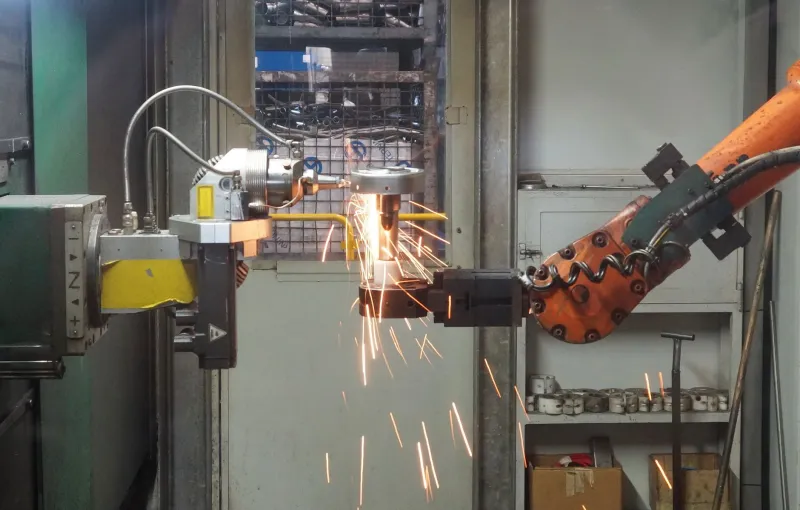
A precision machining company in Pennsylvania that deployed a robotic tending system for its CNC equipment reported a 34 percent increase in machine utilization within eight months of deployment, without adding headcount. That improvement translated directly into the ability to bid on larger contracts with tighter delivery windows—contracts they had previously been unable to pursue.
Practical Entry Points for Smaller Manufacturers
For manufacturers beginning to evaluate automation, the most effective approach is targeted rather than comprehensive. Rather than attempting a facility-wide transformation, high-performing adopters typically identify one or two high-friction, high-volume processes—material handling, machine tending, pick-and-place operations, or quality inspection—and deploy automation there first.
This focused approach generates measurable returns quickly, builds internal capability and confidence, and creates a credible business case for subsequent investment phases.
Engineering partners with experience in mid-market deployments, like the teams at NVS Robotics Bhopal, bring particular value in this context. The ability to conduct a rigorous process assessment, identify the highest-return automation opportunities, and deploy solutions that are appropriately scaled for a smaller operation—rather than adapted versions of enterprise systems—is a capability that directly shapes the quality of returns a smaller manufacturer can achieve.
The Window Is Open, But It Will Not Stay Open Indefinitely
Market transitions create windows of competitive opportunity. The manufacturers who moved early on CNC machining, on lean manufacturing, on ERP adoption—they built advantages that persisted for years. The same dynamic is at work in automation today.
The question for mid-market U.S. manufacturers is not whether automation will eventually be relevant to their operations. It will be. The question is whether they will be among the companies that shaped the transition or among those that responded to it.