Counting the Returns: What Robotics Investments Are Actually Delivering for U.S. Manufacturers in 2024
For years, the conversation around industrial robotics in the United States has been dominated by possibility—what automation could do for throughput, quality, and labor costs. In 2024, however, manufacturers are no longer debating potential. They are measuring results. And what the numbers reveal is both encouraging and instructive.
At NVS Robotics Bhopal, we work closely with engineering and manufacturing clients who demand precision—not just on the factory floor, but in the financial projections that justify capital expenditure. The following analysis draws on publicly available industry data, published case studies, and emerging benchmarks to give operations leaders and CFOs a grounded view of what robotics adoption is genuinely delivering.
The Baseline: What Does a Robotics Investment Actually Cost?
Before examining returns, it is important to establish realistic cost expectations. A single industrial robotic arm—depending on payload capacity, reach, and integrated tooling—typically ranges from $25,000 to $400,000. When system integration, safety infrastructure, software licensing, and installation labor are factored in, total deployment costs for a mid-sized automated cell commonly land between $150,000 and $750,000.
For smaller manufacturers, collaborative robots (cobots) have significantly lowered the barrier to entry. Units from leading suppliers are available in the $35,000 to $75,000 range, with faster deployment cycles and more flexible programming interfaces. This democratization of automation technology has fundamentally shifted the ROI conversation for plants running fewer than 200 employees.
Payback Timelines: The Data Speaks
According to the Association for Advancing Automation (A3), U.S. manufacturers who implemented robotic solutions between 2020 and 2023 reported average payback periods of 18 to 36 months for full robotic cells, and as few as 12 months for targeted cobot deployments in repetitive assembly tasks. These figures vary considerably by industry vertical, production volume, and the degree to which labor cost displacement is the primary driver.
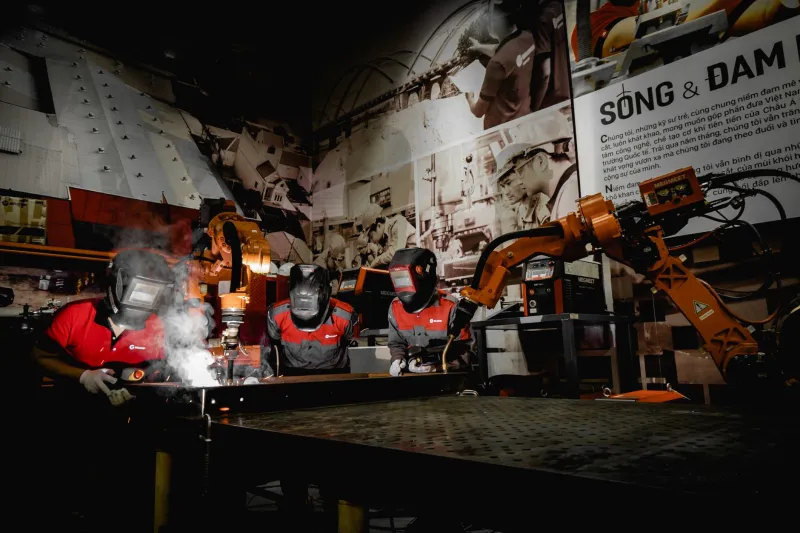
A published case study from a Midwestern automotive components supplier illustrates the calculus clearly. After deploying a six-axis welding robot to replace two manual welding stations, the facility documented the following over a 24-month period:
- Labor cost reduction: $187,000 annually (accounting for redeployment of workers to higher-value tasks)
- Scrap rate improvement: 34% reduction, translating to approximately $62,000 in recovered material value per year
- Throughput increase: 22% uplift in units produced per shift
- Total system cost: $310,000
The effective payback period, factoring in maintenance and consumables, was calculated at 19 months. By month 36, the net gain exceeded $280,000.
This is not an outlier. A food packaging operation in the Southeast reported similar returns after automating its end-of-line palletizing function, citing a 28-month payback and an ongoing annual benefit exceeding $140,000.
Where the Returns Are Strongest
Not all automation investments yield equivalent returns, and understanding where the financial case is most compelling is essential for prioritization.
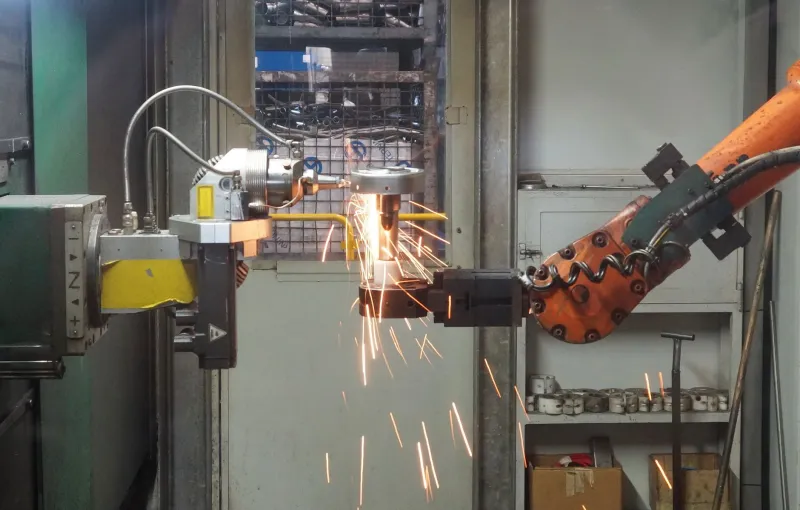
High-volume, high-repetition tasks remain the strongest candidates. Welding, painting, material handling, and pick-and-place operations offer the most predictable ROI because cycle time improvements and defect reductions are highly measurable.
Quality-critical applications are increasingly important. In sectors such as aerospace components and medical device manufacturing, the cost of a single defective part can dwarf the annual operating cost of an inspection robot. Automated vision systems that perform 100% inline inspection—rather than statistical sampling—have documented defect escape reductions of 60% to 85% in peer-reviewed manufacturing studies.
Labor-constrained environments are seeing some of the fastest payback periods in 2024. With U.S. manufacturing unemployment near historic lows and skilled trades gaps widening in states like Ohio, Michigan, and Texas, the cost of unfilled positions is increasingly factored into ROI models. When vacancy costs and overtime premiums are included, the financial case for automation strengthens substantially.
The Emerging Cost-Effective Tier: Automation for Smaller Plants
One of the most significant developments in 2024 is the accessibility of automation for facilities that previously considered robotics the exclusive domain of large-scale operations. Three trends are converging to make this possible.
First, modular automation platforms allow manufacturers to deploy targeted solutions—a single cobot on one assembly station, for instance—without committing to a full-facility overhaul. This phased approach reduces initial capital outlay and allows organizations to build institutional knowledge before scaling.
Second, robotics-as-a-service (RaaS) models are gaining traction among mid-market manufacturers. Under this structure, companies pay a monthly fee that covers equipment, maintenance, and software updates, converting a capital expense into an operating expense. For manufacturers with constrained balance sheets, this model can accelerate adoption timelines considerably.
Third, advances in software and programming interfaces have reduced integration complexity. Modern cobots can often be programmed by technicians with no prior robotics experience, cutting the professional services costs that historically added 30% to 50% to total deployment budgets.
A Note on What the Numbers Don't Capture
Financial ROI calculations, however rigorous, do not fully account for certain strategic benefits. Manufacturers who have automated repetitive or ergonomically hazardous tasks report measurable improvements in employee retention and satisfaction—a significant consideration in today's labor market. Regulatory compliance advantages, particularly in food and pharmaceutical environments, add further non-financial value.
There is also the matter of competitive positioning. In industries where customers are increasingly demanding tighter tolerances, faster lead times, and verifiable quality data, automation is becoming a prerequisite for contract eligibility rather than merely a cost optimization tool.
The Bottom Line for Decision-Makers
The evidence accumulated through 2024 makes a clear case: for the majority of U.S. manufacturers operating at meaningful production volumes, robotics investments are delivering measurable, positive financial returns within commercially acceptable timeframes. The variables that most influence outcomes are task selection, integration quality, and the degree to which workforce transition is managed proactively.
At NVS Robotics Bhopal, our engineering philosophy is grounded in the belief that precision automation must be justified by precision analysis. The tools exist. The data supports the investment. The question for manufacturing leaders is no longer whether robotics delivers returns—it is how to structure deployments that maximize them.