From Central India to the American Factory Floor: How Bhopal's Robotics Engineers Are Quietly Transforming U.S. Manufacturing
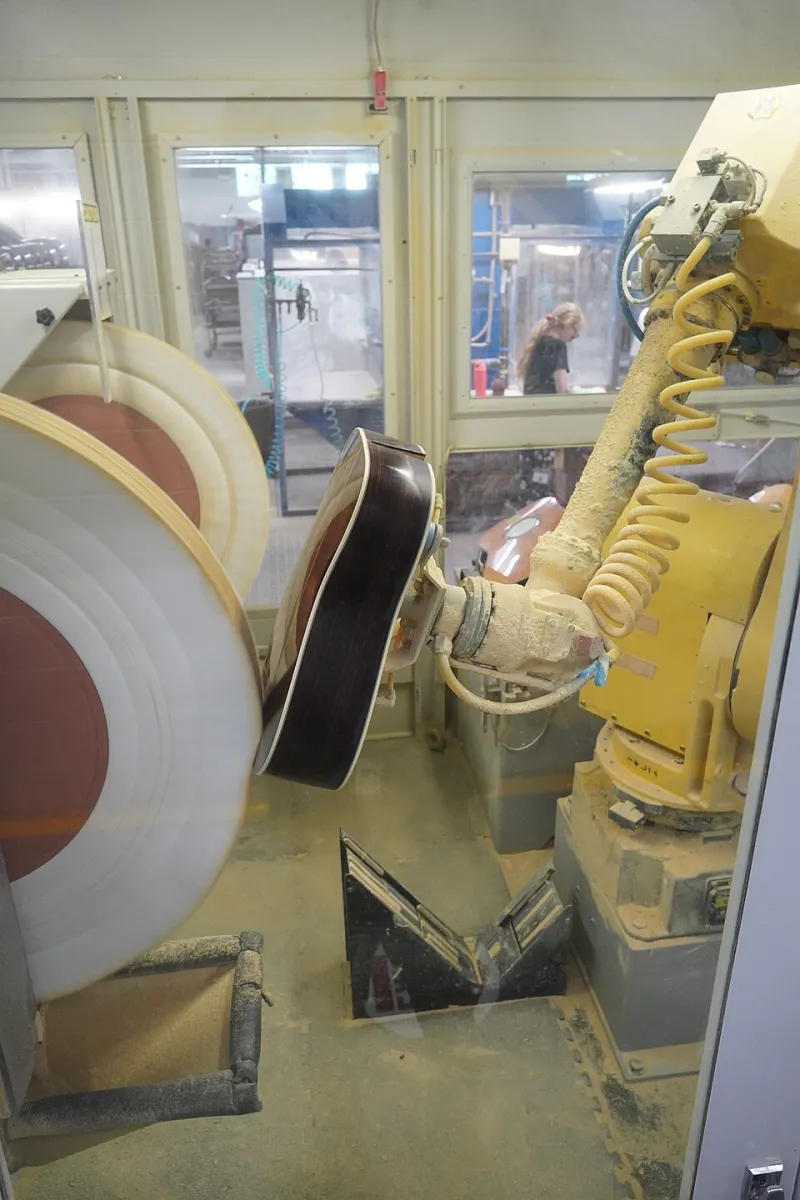
Photo: Henrysz, CC BY 4.0, via Wikimedia Commons
For decades, the conversation around supply chain resilience in the United States has centered on two competing priorities: cost containment and quality assurance. Offshore manufacturing offered savings but introduced logistical complexity. Domestic automation promised reliability but arrived with steep capital expenditures. What neither conversation fully anticipated was the emergence of a third path—one originating not in Silicon Valley or the industrial Midwest, but in the technology corridors of Central India.
The Bhopal-Indore region, historically associated with agricultural commerce and traditional manufacturing, has quietly cultivated a robust ecosystem of precision automation firms over the past fifteen years. Companies operating within this corridor are now delivering robotics and industrial automation solutions to clients across North America, challenging long-held assumptions about where serious engineering talent resides and what it costs to access it.
The Geography of a New Automation Hub
Madhya Pradesh—the state that connects India's northern industrial belt to its southern technology centers—benefits from a combination of factors that have made it increasingly attractive to global manufacturers. Lower operating costs relative to Bangalore or Pune, a growing pool of engineering graduates from institutions such as MANIT Bhopal, and state-level investment in industrial infrastructure have all contributed to the region's rise.
Firms like NVS Robotics, headquartered in Bhopal, have positioned themselves at the intersection of this talent availability and global demand. Rather than competing on generic software development or IT outsourcing—markets already saturated by larger Indian metro areas—these companies have carved a specialized niche in robotics integration, automated quality inspection, and intelligent conveyor and assembly systems tailored for high-volume manufacturing environments.
The strategic value proposition is straightforward: engineering rigor comparable to established automation vendors, delivered at a cost structure that allows U.S. clients to redeploy capital savings into capacity expansion rather than vendor fees.
What American Manufacturers Are Actually Buying
The term "robotics solutions" covers a broad spectrum, and it is worth being precise about what U.S. procurement teams are sourcing from Central India's automation firms. The engagements typically fall into three categories.
Collaborative Robot (Cobot) Integration: Mid-sized American manufacturers in sectors such as automotive components, consumer electronics assembly, and medical device production are deploying cobot systems designed and configured by Indian engineering teams. These systems work alongside human operators, handling repetitive or ergonomically demanding tasks without requiring the full safety enclosures of traditional industrial robots. The design and programming work—often the most expensive phase of deployment—is executed remotely by engineers in Bhopal or Indore, with on-site commissioning handled by a smaller local team.
Vision-Based Quality Control Systems: Automated optical inspection has become a critical capability for manufacturers supplying to aerospace and defense primes, where defect tolerance is measured in parts per million. Indian robotics firms have developed machine-vision platforms that integrate with existing production lines, flagging dimensional variances and surface defects in real time. Several U.S. Tier-1 automotive suppliers have adopted these systems as a cost-effective alternative to expanding manual inspection headcount.
End-to-End Line Automation Design: For greenfield facilities or significant line redesigns, some American companies are engaging Indian robotics firms at the planning stage—bringing them in to design the automation architecture before a single piece of equipment is purchased. This upstream involvement allows for a more coherent system design and often eliminates costly retrofitting later in the project lifecycle.
A Closer Look: Reducing Cycle Time in a Midwest Assembly Operation
Consider the experience of a mid-sized manufacturer of industrial fluid control components based in Ohio. Facing pressure from its primary customer—a Fortune 500 HVAC systems integrator—to reduce per-unit costs by 12 percent without compromising on dimensional tolerances, the company evaluated domestic automation vendors and found that the capital investment required would take more than six years to recover at current production volumes.
A referral through an industry trade group connected the Ohio manufacturer's operations director with a Bhopal-based robotics engineering firm. Over a twelve-week discovery and design phase conducted primarily via video conference and shared engineering documentation, the Indian team proposed a hybrid solution: two collaborative robots handling sub-assembly insertion tasks, paired with a vision inspection station that could be integrated into the existing conveyor infrastructure with minimal downtime.
The total project cost, including remote engineering, equipment procurement coordination, and a two-week on-site commissioning visit by two engineers from India, came in at roughly 60 percent of the lowest domestic bid. Cycle time on the targeted assembly cell dropped by 23 percent within the first quarter of operation. The manufacturer subsequently engaged the same Indian firm to evaluate two additional production lines.
This type of outcome—measurable, documented, and replicable—is what is driving broader interest among U.S. procurement and operations leaders.
Addressing the Concerns That Remain
Skepticism is reasonable, and American manufacturers considering this model raise legitimate questions. Intellectual property protection, time-zone coordination, and the absence of an on-site engineering presence during day-to-day operations are the most frequently cited concerns.
Reputable firms in the Bhopal-Indore corridor address these concerns through formal contractual frameworks, including U.S.-enforceable non-disclosure agreements and work-for-hire clauses that assign all developed IP to the client. Time-zone overlap, while imperfect, is manageable: a 10.5-hour difference between U.S. Central Time and India Standard Time means that morning hours in the U.S. Midwest align with early evening in Bhopal, creating a workable daily communication window.
The on-site presence question is perhaps the most nuanced. For ongoing operational support, most engagements rely on a combination of remote monitoring, detailed documentation, and periodic site visits. For clients who require a more persistent local presence, some Indian automation firms are exploring partnerships with U.S.-based systems integrators who can provide day-to-day support under a subcontracting arrangement.
The Broader Implication for Supply Chain Strategy
The rise of Central India's robotics sector is not merely a cost arbitrage story. It reflects a fundamental shift in where advanced engineering capability is being developed and how it is being delivered across borders. For U.S. manufacturers navigating margin pressure, labor market tightness, and the ongoing imperative to modernize production infrastructure, the Bhopal-Indore corridor represents a resource that many have yet to fully evaluate.
The companies that engage early—building relationships with firms like NVS Robotics before competitive pressure forces a reactive decision—are likely to find themselves with a more flexible, cost-efficient automation partner than those who wait for a crisis to prompt action.
Precision automation does not recognize geography as a barrier. What it requires is engineering discipline, clear communication, and a client willing to look beyond conventional vendor maps. Central India has made that case on factory floors from Ohio to Texas. The question now is how many more American manufacturers are ready to listen.