Automation's Expanding Frontier: Precision Robotics Is Rewriting the Rules in Logistics, Healthcare, and Food Production
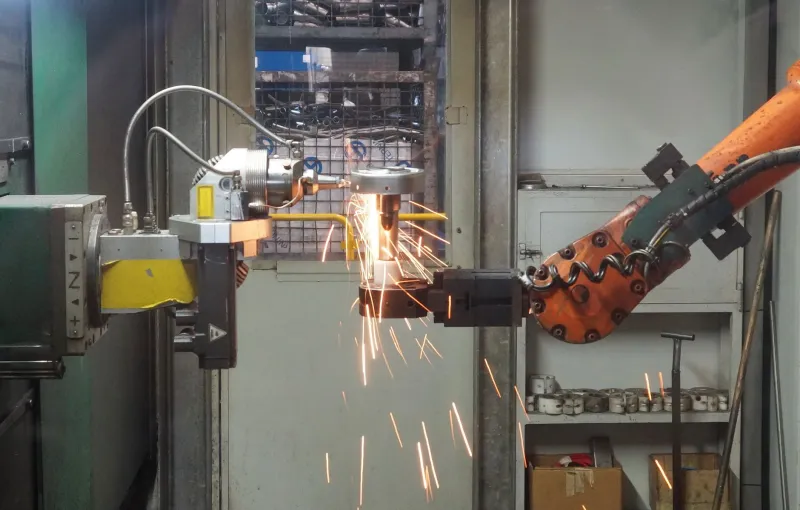
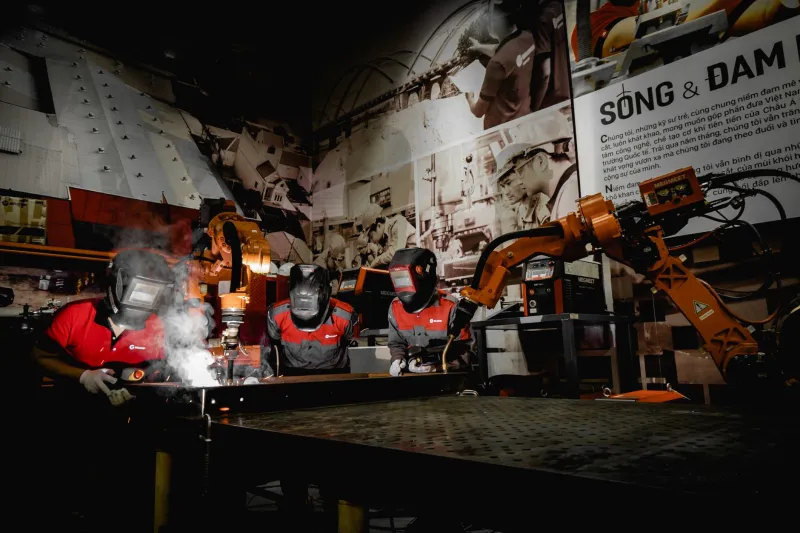
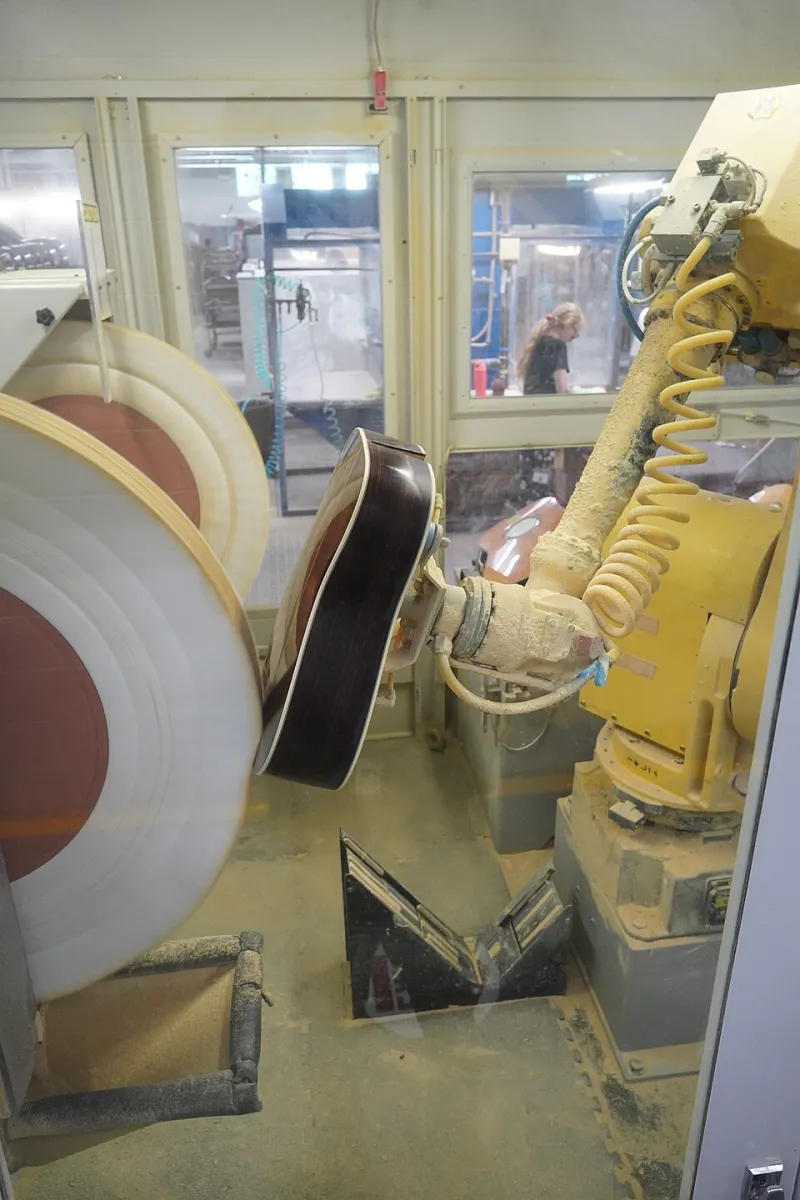
For most of its industrial history, robotics has been synonymous with the factory floor—welding arms in automotive plants, assembly cells in electronics facilities, CNC-integrated machining centers in aerospace supply chains. That association, while historically accurate, is rapidly becoming insufficient to describe where precision automation is making its most consequential impact.
Across the United States, industries that once viewed robotics as peripheral to their operations are discovering that automated systems are not merely useful—they are becoming structurally necessary. The pressures driving this shift are well-documented: persistent labor shortages, rising consumer expectations for speed and accuracy, heightened regulatory scrutiny, and the competitive dynamics of a global economy that rewards efficiency relentlessly. What is less well-understood is how the specific characteristics of precision automation are being adapted to meet the unique demands of sectors well beyond traditional manufacturing.
This is an argument worth making clearly: the next decade of American economic competitiveness will be shaped not only by the factories that automate, but by the distribution centers, hospitals, pharmacies, and food processors that do so as well.
Logistics: Where Speed Meets Scale
The e-commerce revolution has fundamentally altered the economics of warehouse and fulfillment operations. Consumer expectations that were once considered aspirational—next-day delivery, real-time inventory visibility, error-free order fulfillment—have become baseline requirements. Meeting those expectations at scale, with a workforce that is chronically difficult to staff and retain, has made logistics one of the fastest-growing domains for robotics investment in the United States.
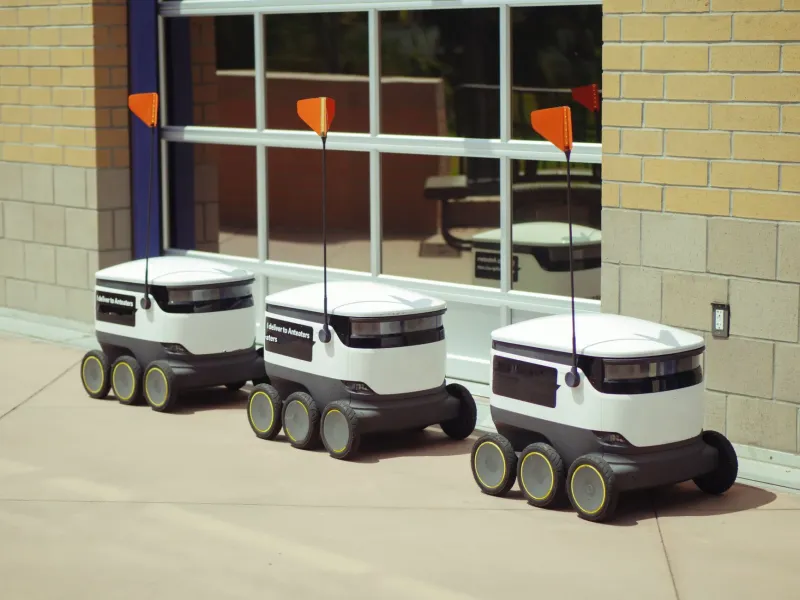
Autonomous mobile robots (AMRs) now navigate the floors of major fulfillment centers from coast to coast, transporting goods between storage locations and packing stations with a consistency and speed that manual operations cannot match. Goods-to-person systems—where robotic shuttles retrieve inventory and deliver it to stationary human pickers—have been shown to increase order pick rates by 200% to 400% compared to traditional walk-and-pick methods, while simultaneously reducing the physical strain that drives high turnover among warehouse workers.
Beyond order fulfillment, automated sortation systems are transforming parcel handling at regional distribution hubs. Vision-guided systems that can read package dimensions, weight, and destination data in real time—then route each item to the appropriate outbound lane without human intervention—are processing volumes that would require hundreds of additional manual sorters to replicate.
The competitive implications are significant. Logistics operators who have invested in these systems are processing higher volumes with more predictable cost structures, giving them pricing flexibility that manual-intensive competitors cannot match. For regional carriers and third-party logistics providers serving U.S. markets, the automation gap is becoming a survival issue, not merely an efficiency one.
Healthcare: Precision Where the Stakes Are Highest
Few environments demand greater accuracy than healthcare, and few have historically been more resistant to automation. The reasons for that resistance—regulatory complexity, patient safety concerns, the irreducibly human dimensions of clinical care—remain valid. But they are increasingly being reconciled with the recognition that human error in medication dispensing, supply chain management, and sterile compounding carries its own profound risks.
Automated pharmacy dispensing systems are now standard infrastructure in most large U.S. hospital networks, reducing medication dispensing errors by rates that peer-reviewed studies consistently place above 50% compared to manual processes. Robotic dispensing cabinets at the point of care ensure that controlled substances are tracked with a precision that manual logging cannot replicate, supporting both patient safety and regulatory compliance under DEA oversight.
In pharmaceutical supply chains—an area of acute national concern following the supply disruptions exposed during the COVID-19 pandemic—automated storage and retrieval systems are improving inventory accuracy and expiration management in ways that reduce waste and prevent the stockouts that compromise patient care. The FDA's increasing emphasis on serialization and track-and-trace requirements for pharmaceutical products has made automation not just operationally attractive but, in many contexts, functionally necessary for compliance.
Perhaps most consequentially, surgical robotics platforms are enabling procedures with levels of precision and minimally invasive technique that extend patient recovery advantages and expand access to complex interventions at facilities that previously lacked the specialist surgical volume to justify dedicated teams. The clinical outcomes data supporting these platforms continues to strengthen, and adoption among U.S. health systems is accelerating accordingly.
The workforce implications in healthcare automation deserve candid acknowledgment. The concern that robots will displace clinical workers is understandable but, in most healthcare applications, overstated. The more accurate framing is that automation absorbs the high-volume, low-discretion tasks—counting pills, retrieving supplies, logging transactions—that currently consume the time of trained professionals who could be applying their expertise elsewhere. The labor challenge in American healthcare is not an oversupply of workers; it is a chronic shortage. Automation that frees clinical staff from administrative burden is, in this context, an expansion of human capacity rather than a replacement of it.
Food Processing: Safety, Consistency, and the Regulatory Imperative
The food and beverage industry occupies a distinctive position in the automation landscape. Consumer demands for safety and consistency are non-negotiable, regulatory requirements under the Food Safety Modernization Act (FSMA) are increasingly stringent, and the physical environments in which food processing occurs—cold, wet, and corrosive—have historically made robotic deployment more technically challenging.
Those challenges have not disappeared, but they have been substantially addressed. Modern food-grade robotic systems are engineered for washdown environments, built from materials that resist bacterial harboring, and validated for compliance with USDA and FDA sanitary design standards. The result is a generation of automation solutions that can operate in conditions where human workers are, frankly, less reliable and more costly to protect.
Vision-guided robotic systems are now performing quality inspection tasks in food production—detecting foreign material contamination, verifying fill levels, and identifying packaging defects—at speeds and accuracy rates that manual inspection lines cannot approach. In meat and poultry processing, where repetitive motion injuries among workers have historically generated significant workers' compensation liability and OSHA scrutiny, robotic cutting and portioning systems are improving both safety outcomes and yield consistency simultaneously.
The traceability requirements embedded in FSMA have also created a natural alignment between automation and regulatory compliance. Automated systems that record every production variable—temperature, weight, batch number, line speed—generate the documentation that regulators require and that manual processes struggle to produce reliably.
The Regulatory and Workforce Horizon
Expansion into these sectors does not occur without friction. Regulatory frameworks governing automation in healthcare and food processing are complex and evolving, and companies that move too quickly without adequate compliance planning risk costly setbacks. The FDA's approach to software-driven medical devices, for example, is undergoing significant revision, and logistics operators deploying AMRs in shared human-robot environments must navigate OSHA guidance that has not yet fully caught up with the technology.
Workforce implications vary by sector but share a common thread: the transition requires deliberate investment in reskilling and role redefinition. The workers who staff American logistics centers, food plants, and healthcare facilities are not interchangeable with the technicians needed to operate and maintain automated systems. Closing that gap requires commitment from employers, educational institutions, and policymakers that, in many regions, remains incomplete.
A Broader Vision of Precision
At NVS Robotics Bhopal, our work is guided by a conviction that precision automation is not a manufacturing concept—it is an operational philosophy applicable wherever accuracy, consistency, and efficiency determine outcomes. The expanding footprint of robotics across American logistics, healthcare, and food production is not a disruption to be managed; it is an opportunity to be pursued with rigor and foresight.
The organizations that will define competitive advantage in these sectors over the next decade are already asking the right questions. The technology exists. The business case is building. The frontier is open.