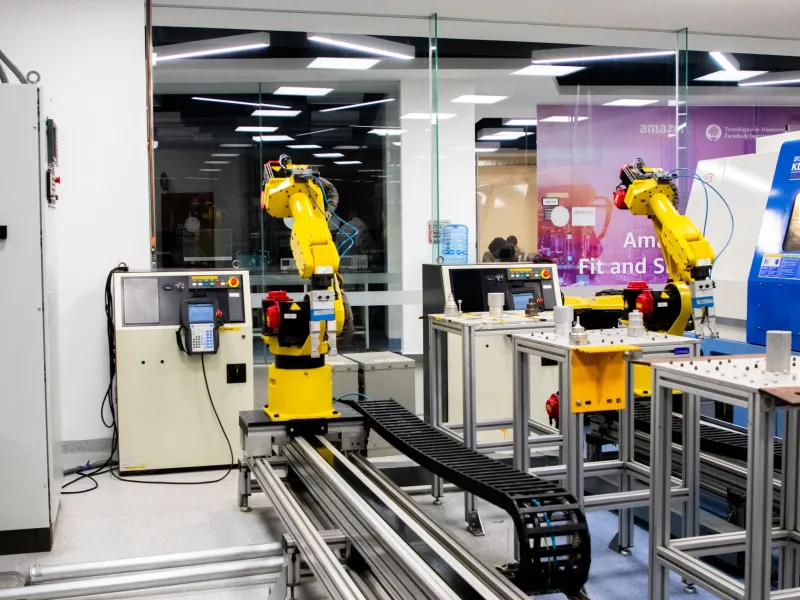
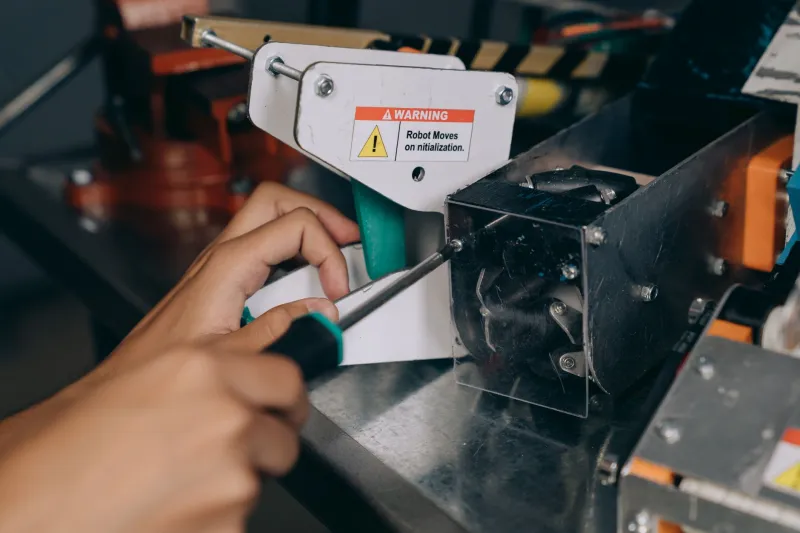
The Human Side of Automation: Addressing Worker Anxiety and Building a Factory Floor Culture That Embraces Robotics
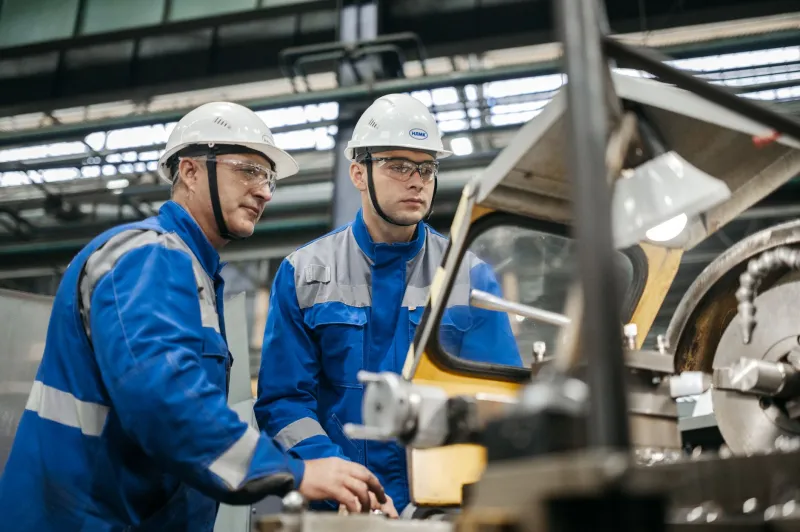
A robotics installation project can be engineered to near perfection—correct specifications, thorough commissioning, on-time delivery—and still underperform for years. The reason, more often than plant managers care to admit, is not mechanical. It is cultural.
When workers on a factory floor distrust the robots working beside them, the consequences are measurable. Operators delay reporting minor system anomalies. Maintenance requests are submitted with insufficient detail. Workarounds emerge that circumvent automated processes entirely. The system technically functions, but the human-machine collaboration that would maximize its value never fully materializes.
Addressing this dynamic requires understanding something that engineering teams are rarely trained to prioritize: the psychology of occupational uncertainty.
Why Fear Is a Rational Response
It would be easy to dismiss worker resistance to automation as technophobia or simple resistance to change. That characterization is both inaccurate and counterproductive. In many cases, the anxiety that factory floor workers experience when robotic systems are introduced reflects a perfectly rational assessment of their circumstances.
For workers in their 40s and 50s who have spent decades mastering a specific set of physical skills—operating a press, managing a welding station, running a packaging line—the arrival of a robot that performs those tasks with greater speed and consistency is not an abstraction. It is a direct challenge to the professional identity and economic security they have built over a career.
A 2022 study published in the Journal of Applied Psychology found that workers who perceived automation as a direct threat to their specific job functions showed significantly elevated psychological stress responses, reduced organizational commitment, and lower willingness to engage in discretionary effort—all of which directly affect production quality and facility performance.
The problem is not that these workers are wrong to feel concerned. The problem is that most U.S. manufacturers provide them with insufficient information and inadequate preparation to update that assessment.
The Retraining Myths That Widen the Gap
Among the most damaging misconceptions in industrial change management is the belief that a brief training program resolves worker anxiety about automation. Many facilities respond to new robotic installations with a one- or two-day orientation session, after which workers are expected to operate comfortably alongside systems they have never encountered before.
This approach conflates skill transfer with cultural integration—and they are not the same thing.
Skill transfer addresses whether a worker knows how to interact with a new system. Cultural integration addresses whether that worker believes the new system represents an opportunity rather than a threat. The first can be accomplished in days. The second requires months of deliberate, sustained organizational effort.
Common myths that impede this process include:
-
"Workers will come around once they see the robot working." Exposure alone does not reduce anxiety. Without structured communication about what the automation means for individual roles, workers often interpret a smoothly functioning robot as confirmation of their fears rather than reassurance.
-
"Retraining programs are expensive and slow." Modern robotics operator certification programs can be completed in as little as 40 hours of structured instruction. The cost is modest compared to the productivity losses associated with a disengaged workforce during a multi-year automation deployment.
-
"The workers who resist will eventually leave and be replaced by people who are more comfortable with technology." This approach sacrifices institutional knowledge, increases turnover costs, and signals to remaining workers that the organization views them as interchangeable rather than valuable.
Concrete Strategies for Change Management That Actually Works
The manufacturers who navigate automation transitions most successfully share a common characteristic: they involve workers in the process before the robots arrive, not after.
1. Transparent communication, early and often. Workers should hear about automation plans from organizational leadership—not from rumors or secondhand accounts. This communication should include honest discussion of which tasks will be automated, what new roles will be created, and what the organization's specific commitments are regarding workforce transitions.
2. Worker involvement in system design and configuration. Operators who work alongside the processes being automated often have insights that engineers working from specifications do not. Inviting floor-level input into robot placement, workflow design, and interface configuration serves two purposes: it improves system design, and it gives workers a sense of ownership over the technology.
3. Structured role evolution pathways. Workers need to see a credible path from their current role to a viable future one. This means identifying which employees will transition to robot monitoring roles, which will move into maintenance support functions, and which will take on quality oversight responsibilities that automation creates rather than eliminates. Specificity matters here—vague assurances are not reassuring.
4. Peer champion programs. Identifying and supporting early adopters among the workforce—workers who engage positively with new systems and can serve as informal advocates among their colleagues—is one of the most cost-effective change management tools available. Peer influence consistently outperforms top-down messaging in driving behavioral change on the factory floor.
5. Psychological safety for reporting problems. Workers who fear that reporting a robot malfunction will be interpreted as sabotage or incompetence will delay those reports. Establishing clear, blame-free reporting protocols and reinforcing them through supervisory behavior creates the feedback loop that keeps automated systems performing at their best.
The Evidence That Automation Creates, Not Destroys
The empirical record on automation and employment in U.S. manufacturing is more nuanced than the public narrative often suggests. A 2021 analysis by the Brookings Institution found that facilities that adopted advanced automation at moderate to high rates between 2010 and 2020 experienced net employment growth within three to five years of deployment, driven by new roles in system operation, maintenance, quality assurance, and process optimization.
The challenge is that this transition is not automatic. The new jobs require different skills than the ones being automated. Workers who receive active support, structured training, and organizational commitment during the transition period are far more likely to occupy those new roles than workers who are left to navigate the change independently.
At NVS Robotics Bhopal, our implementation philosophy recognizes that deploying a robotic system is not the end of a project—it is the beginning of an organizational change process. The technology is only as effective as the human system surrounding it.
From Skepticism to Stewardship
The goal of effective automation change management is not compliance. It is stewardship—a workforce that understands the systems it works alongside, takes genuine ownership of their performance, and contributes to their continuous improvement.
That outcome is achievable in virtually any manufacturing environment. But it requires treating the human side of automation with the same rigor and investment that manufacturers routinely apply to the technical side. The robots are ready. The question is whether the organization around them is prepared to unlock their full potential.