Your Automation System Is Aging Faster Than You Think: A Practical Guide to Knowing When to Upgrade
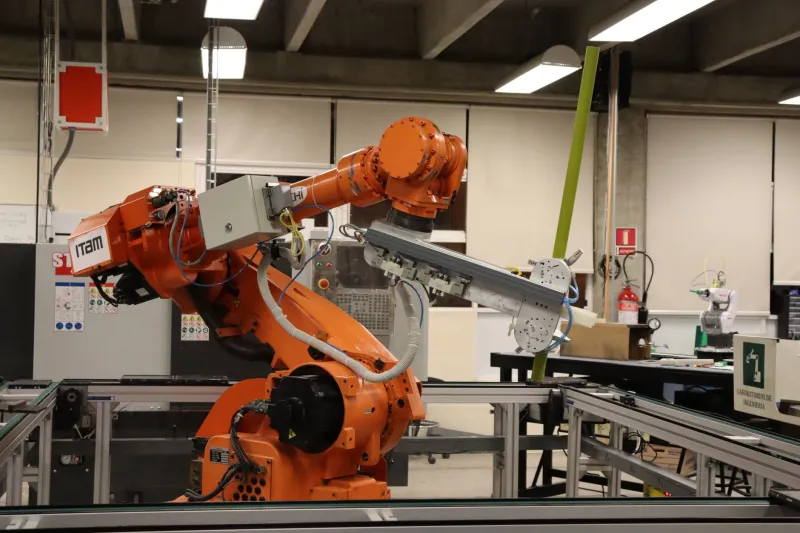
There is a particular kind of operational blindness that affects manufacturers who invested in robotics five to seven years ago and have been running those systems reliably ever since. The equipment works. Maintenance costs are manageable. Production targets are being met. There is no crisis demanding attention, and so the question of whether those systems are still competitive rarely surfaces in quarterly reviews.
This is precisely where the problem lives.
Robotics technology has advanced at a rate that makes five-year-old systems look considerably older than their age suggests. The gap between a 2019 robot cell and a 2024 installation of equivalent function is not incremental—it can be substantial in terms of speed, energy consumption, programming flexibility, integration capability, and data output. A system that was state-of-the-art when it was commissioned may now be a productivity anchor, quietly holding the facility back from performance levels that competitors with newer equipment are already achieving.
The Telltale Signs Your Automation Is Falling Behind
Most aging automation systems do not announce their obsolescence. They send quieter signals that are easy to rationalize in isolation but form a clear pattern when viewed together.
Increasing maintenance frequency and parts scarcity. When a robot controller or servo drive requires replacement and the lead time is measured in weeks rather than days, that is a supply chain signal worth noting. Manufacturers of industrial robotics typically support their systems with spare parts for 10 to 15 years post-production, but availability and cost both deteriorate meaningfully as systems age. If your maintenance team is spending time sourcing components from third-party refurbishers or cannibalizing other machines, the underlying economics of continued operation are shifting.
Changeover times that no longer match market demands. Product variety requirements across most manufacturing sectors have expanded significantly over the past several years. If your robotic cells require mechanical retooling or lengthy reprogramming for product variants that competitors are handling with software-only changeovers, the flexibility deficit is costing you in responsiveness and capacity.
Integration barriers with newer systems. Modern manufacturing operations increasingly rely on connected systems—ERP platforms, quality management software, predictive maintenance tools, and supply chain visibility applications. Older robot controllers often communicate through protocols that require expensive middleware or simply cannot interface with contemporary platforms at all. The data that newer systems generate natively may be entirely inaccessible from legacy equipment.
Energy consumption relative to current standards. Drive technology, motor efficiency, and regenerative braking capabilities have improved substantially. A 2018 robot installation may consume 25 to 40 percent more energy performing the same task as a current-generation equivalent. At scale, across a facility with multiple cells running multiple shifts, that differential is meaningful.
Upgrade Versus Replace: The Economics Are Not What You Expect
When an aging system begins showing these symptoms, manufacturers typically face a choice between upgrading components within the existing platform and replacing the system entirely. The instinct is often to upgrade—the capital outlay is smaller, the operational disruption is shorter, and the decision is easier to justify to a budget committee.
This instinct is sometimes correct and sometimes significantly wrong, and the distinction depends heavily on which generation of system is being evaluated.
For systems that are genuinely mid-life—three to five years old with a capable underlying controller—targeted upgrades can deliver meaningful performance improvements. Replacing end-of-arm tooling with a more capable design, adding a machine vision system to an application that previously relied on mechanical fixturing, or upgrading the programming interface to a more current software environment can extend productive life by several years at a fraction of replacement cost.
For systems that are approaching or past the ten-year mark, the calculus shifts. The controller architecture that underlies an older system imposes hard limits on what upgrades can accomplish. You can install a new gripper on a robot whose motion controller cannot execute the path precision that gripper is designed to achieve. You can add sensors to a cell whose data infrastructure cannot process or transmit the output. At some point, you are spending money to improve the periphery of a system whose core is the constraint.
A packaging equipment manufacturer in the Pacific Northwest learned this the hard way after investing approximately $180,000 in upgrades to a 2014 robot line, only to find that throughput improvements plateaued well below the facility's targets because the original controller's cycle time limits could not be overcome through peripheral improvements. A full replacement, which they ultimately undertook 18 months later, achieved the throughput targets within the first quarter of operation.
Building a Strategic Refresh Cycle
The manufacturers who navigate automation obsolescence most effectively are not the ones who respond to crises—they are the ones who plan refresh cycles the same way they plan equipment depreciation schedules.
A practical framework begins with categorizing installed automation by generation and strategic criticality. Systems that handle core production processes warrant closer monitoring and earlier refresh consideration than peripheral automation handling secondary functions. Within each category, establish a formal review trigger: not a fixed calendar date, but a set of performance thresholds—maintenance cost as a percentage of system value, changeover time relative to competitive benchmarks, integration capability against current operational requirements—that, when crossed, initiate a replacement evaluation.
This framework serves a secondary purpose beyond operational efficiency: it creates a predictable capital planning timeline that finance teams can incorporate into multi-year budgets. Robotics replacements that arrive as surprises in a fiscal year tend to get deferred. Replacements that have been anticipated for 18 months tend to get funded.
The Phased Replacement Approach
For manufacturers operating multiple robot cells, full simultaneous replacement is rarely practical. A phased approach—replacing the highest-priority cells first while maintaining the remaining legacy systems—allows operational continuity while progressively upgrading the installed base.
This approach also creates an important organizational benefit: each replacement cycle builds institutional knowledge about the new platform before the next replacement begins. The technicians who commission the first new cell become the internal experts who support the second and third replacements, reducing dependence on external integration resources over time.
At NVS Robotics Bhopal, we have supported U.S. manufacturers through phased replacement programs that span two to four years, and the pattern consistently shows that the final cells in a replacement sequence are commissioned faster, with fewer complications, and at lower integration cost than the first—because the organization has learned.
The Opportunity in the Transition
System replacement, when approached strategically, is not merely a maintenance decision. It is an opportunity to redesign the process the automation is executing—to incorporate the process knowledge accumulated over years of running the legacy system into a new configuration that is genuinely superior rather than simply current.
Manufacturers who treat replacement as a like-for-like swap tend to get like-for-like results. Those who use the transition as a designed improvement exercise tend to emerge with systems that outperform not just the equipment they replaced, but the performance levels they originally targeted.
The robots that were state-of-the-art when you installed them served their purpose well. The question worth asking now is not whether they still work—it is whether working is enough.